AMD Ryzen 5 5600 · 2-channel
B550 motherboard
- Max memory
- 128 GB
- Theoretical bandwidth
- 51.2 GB/s
- Motherboard + CPU
- Reference
- $210
- Power supply
- 650 W
- $70
- Reference build price
- $2,969
DDR4 has been in wide use since 2014. Desktops use unbuffered sticks (UDIMM), usually 2666 to 3600 MT/s. Servers use registered ECC sticks (RDIMM) and have more memory channels, so one machine can hold several hundred GB. A used DDR4 server with plenty of RAM is one of the cheapest ways to run large MoE models on a CPU today.
As an eBay Partner, VRAMGlass may be compensated if you buy through the eBay links on this page. The price you pay stays the same.
As an eBay Partner, VRAMGlass may be compensated if you buy through the eBay links on this page. The price you pay stays the same.
| Spec | Price per stick | Price per GB | Bandwidth per stick | 7-day change | 30-day change | 30-day trend | Buy |
|---|---|---|---|---|---|---|---|
| 16 GB | $8989 listings | $5.6 | 21.3 GB/s | +4.7% | +4.7% | Buy | |
| 16 GB | $96157 listings | $6 | 25.6 GB/s | 0.0% | +20.0% | Buy | |
| 16 GB | $110144 listings | $6.9 | 28.8 GB/s | +2.8% | +2.8% | Buy | |
| 32 GB | $19541 listings | $6.1 | 21.3 GB/s | -2.5% | -2.5% | Buy | |
| 32 GB | $23585 listings | $7.3 | 25.6 GB/s | +4.4% | +17.5% | Buy | |
| 32 GB | $24033 listings | $7.5 | 28.8 GB/s | -1.6% | -1.6% | Buy |
| Spec | Price per stick | Price per GB | Bandwidth per stick | 7-day change | 30-day change | 30-day trend | Buy |
|---|---|---|---|---|---|---|---|
| 16 GB | $8048 listings | $5 | 17.1 GB/s | 0.0% | 0.0% | Buy | |
| 16 GB | $11051 listings | $6.9 | 21.3 GB/s | -5.2% | -22.5% | Buy | |
| 16 GB | $13238 listings | $8.3 | 25.6 GB/s | +3.9% | +3.9% | Buy | |
| 32 GB | $19726 listings | $6.2 | 17.1 GB/s | +1.0% | +1.0% | Buy | |
| 32 GB | $22039 listings | $6.9 | 21.3 GB/s | 0.0% | +1.9% | Buy | |
| 32 GB | $30939 listings | $9.7 | 25.6 GB/s | 0.0% | 0.0% | Buy |
Price per stick is the median of the latest round of eBay listings; kits are split into single sticks first. Speeds are backward compatible: if a motherboard only supports 2666, a 3200 stick still works and runs at 2666.
Hand-picked deals from trusted eBay sellers. Shop with confidence.
As an eBay Partner, VRAMGlass may be compensated if you buy through the eBay links on this page. The price you pay stays the same.
 Micron 16GB 1Rx8 PC4-3200AA DDR4 UDIMM Desktop Memory RAM Perfect$60Buy on eBay
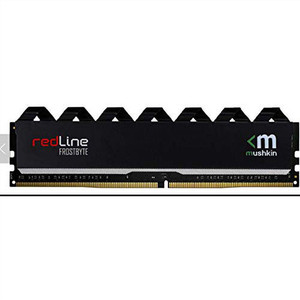 Mushkin Redline Black MRC4U320GJJM16G 16GB DDR4-3200 CL16 UDIMM Desktop Memory
 SK Hynix 32GB PC4-3200AA 3200Mhz DDR4 UDIMM Desktop Memory RAM HMAA4GU6AJR8N-XN$179Buy on eBay
 ADATA 32GB DDR4 3200MHz Desktop RAM Memory Module | 1x32GB UDIMM PC4-25600$190Buy on eBay
Hand-picked deals from trusted eBay sellers. Shop with confidence.
As an eBay Partner, VRAMGlass may be compensated if you buy through the eBay links on this page. The price you pay stays the same.
 Lenovo 16GB 2Rx8 PC4-21300 (DDR4-2666V) DDR4 ECC Server Memory Ram$89Buy on eBay
 Kingston 16GB DDR4 2666 ECC Registered Memory Ram KSM26RD8/16HDI tested good$90Buy on eBay
 32GB 2Rx4 DDR-4 2666V MHz ECC Reg. Micron MTA36ASF4G72PZ-2G6E1RI$175Buy on eBay
 32GB 2Rx4 DDR-4 2666V MHz ECC Reg. Micron MTA36ASF4G72PZ-2G6E1QI$175Buy on eBay
In a large MoE model, the expert weights can sit in system RAM while the GPU holds only the attention and shared weights: more RAM fits larger models, and more bandwidth means faster generation. Below are three builds with every memory slot filled, a desktop PC, a single-socket server and a dual-socket server, each with one RTX 3090.
B550 motherboard
Supermicro H12SSL-i motherboard
Supermicro H12DSi-N6 motherboard
A dual-socket build's theoretical bandwidth is the sum of both CPUs, but generation doesn't get twice as fast. With llama.cpp, MoE models run barely faster on two sockets than on one; KTransformers' dual-socket mode, which keeps a copy of the weights on each CPU, measured about 40% faster. With all four slots filled, many desktop motherboards have to lower the memory speed to stay stable, so real bandwidth is below the theoretical figure.
Reference build price = live eBay median prices for the RAM and GPU + reference prices for the motherboard, CPU and power supply.
ECC (error-correcting code) memory stores 8 extra check bits for every 64 bits of data, so a single bit that occasionally flips in memory is corrected automatically. That is why an ECC stick has one or two more chips than a regular stick of the same spec. Server memory (RDIMM) always has ECC. On a desktop, error correction only works if both the CPU and the motherboard support it. On a platform that doesn't, an ECC UDIMM usually still works, just without error correction. You don't need to buy ECC memory specifically to run local LLMs.
Desktops use unbuffered memory (UDIMM); servers use registered memory (RDIMM). An RDIMM has an extra register chip that takes load off the memory controller, so each channel can hold more sticks and each stick can be larger (32GB and 64GB are common). All RDIMMs have ECC. The trade-off is lower speeds and looser timings: server sticks are commonly DDR4-2400 or 2666, desktop sticks 3200 or 3600. The two types are not electrically compatible: an RDIMM won't work on a desktop motherboard, and a UDIMM won't work on a server motherboard that only takes RDIMMs.
The number before R is the rank count. A rank is a group of chips on the stick that are read and written together to make up 64 bits of data: 1R is single-rank, 2R is dual-rank. The number after x is the data width of each chip in bits. It takes 8 x8 chips or 16 x4 chips to make 64 bits, so x4 sticks can reach higher capacities, and most high-capacity server sticks are 2Rx4. The more ranks in a channel, the more likely the motherboard is to lower the memory speed when all slots are filled.
CL (CAS latency) is the number of clock cycles between a read command and the data coming out. Lower is faster. To get the real latency, convert it using the speed: nanoseconds = CL × 2000 ÷ speed in MT/s. DDR4-3200 CL16, common on desktops, works out to 10 ns; DDR4-2666 CL19, common on servers, to about 14 ns. When an LLM runs, every generated token means reading several to tens of GB of weights from memory. Bandwidth is what counts, and timings have very little effect.
Sticks with different speeds will work together, but they all run at the speed of the slowest stick, with the loosest timings. With different capacities, only the capacity that matches on both channels is interleaved in dual-channel mode, so bandwidth drops. Different brands usually work, but the safest choice is the same model from the same batch. Three combinations can't be mixed: desktop sticks (UDIMM) with server sticks (RDIMM), RDIMM with LRDIMM, and DDR4 with DDR5 (the notch is in a different place, so they don't fit). On a server, every channel needs identical sticks to reach full bandwidth.
A stick transfers 64 bits, or 8 bytes, at a time, so bandwidth per stick = speed × 8. DDR4-3200 gives 25.6 GB/s, which is what PC4-25600 on the label refers to. Platform bandwidth = bandwidth per stick × number of channels. A desktop has only 2 channels, so 4 sticks still give 51.2 GB/s: extra sticks add capacity, not bandwidth. EPYC 7002 / 7003 has 8 channels, which reach 204.8 GB/s when all are filled.
The number is the speed, and the letter after it is the JEDEC timing grade: 2133P is CL15, 2400T is CL17, 2666V is CL19, 2933Y is CL21 and 3200AA is CL22. PC4-21300 is the same speed written as bandwidth (2666 × 8 ≈ 21300 MB/s). In PC4-2666V-RB2, a string often seen in Xianyu listing titles, the R after the hyphen means RDIMM; U would be a desktop stick, S a laptop stick and L an LRDIMM. The letters and digits after that are the PCB revision, which you can ignore when buying.